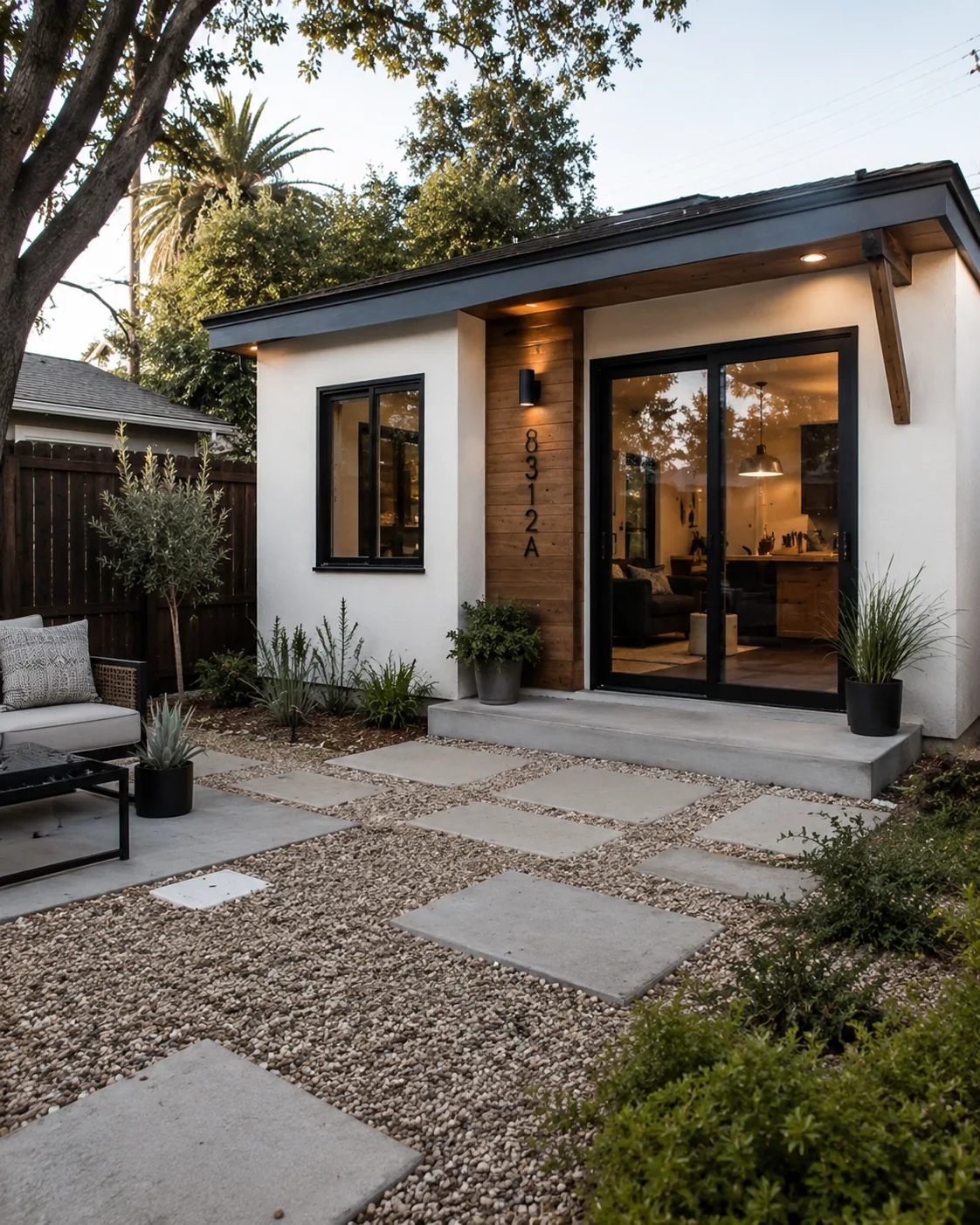
Detached ADUs in San Diego

Backyard ADUs built for San Diego lots, rental income, and family privacy.

A detached ADU is the cleanest way to add a second home to a San Diego property without tying the new unit into the daily life of the main house. The details matter: side access, sewer route, panel capacity, roof height, fire zone, setbacks, drainage, privacy lines, parking, and how the unit will actually be used.

Best forRental income, parents, adult children, guest house use, long-term flexibility
Watch-outsUtilities, stormwater, fire access, privacy, slope, construction staging
Planning keyConfirm jurisdiction, buildable envelope, service runs, and permit path first

This page is written for San Diego homeowners comparing a detached backyard ADU against an attached ADU, garage conversion, JADU, prefab unit, or bonus-unit strategy. It is focused on real decisions that affect layout, cost, permitting, rental value, construction timeline, and long-term usability.

San Diego takeaway: the “best” detached ADU is rarely the biggest one. The best unit is the one that fits the lot cleanly, avoids expensive utility surprises, keeps private outdoor space, passes review without redesign, and rents or lives comfortably without feeling like a squeezed backyard box.

What counts as a detached ADU?

A detached ADU is a separate residential structure on the same lot as the main home. It has its own entrance, kitchen or cooking facilities, bathroom, sleeping area, living area, and independent life safety requirements. In everyday San Diego language, people call it a backyard house, granny flat, casita, guest house, in-law unit, rental cottage, or second unit.

1

It is separate from the house

The ADU does not share a common wall with the main home. That separation is the main advantage. It improves privacy, reduces sound transfer, creates a clearer rental boundary, and makes the unit feel like a real small home instead of an addition.

2

It is more flexible than a conversion

You are not trapped by the size, slab, ceiling height, door placement, or framing condition of an old garage. A detached build lets you choose orientation, window placement, storage, bedroom count, outdoor area, and tenant access from the start.

3

It needs more site coordination

Because it is a new structure, the project must solve foundation, drainage, sewer, water, electrical, fire access, Title 24 energy compliance, construction staging, and inspection sequencing. This is where many underplanned ADU budgets fail.

When a detached ADU makes the most sense on a San Diego property

Detached ADUs are strongest on properties where the backyard or side yard can support a complete small residence without destroying the main home’s privacy, usable outdoor space, or access. The ideal lot is not always large. It is usually a lot with a clean path from the street to the build area, reasonable utility routes, workable grade, and enough separation to give both homes a sense of independence.

Strong detached ADU candidates

  • Backyards with 700 to 1,500 square feet of usable open area after accounting for access, setbacks, drainage, and outdoor living space.
  • Lots with side-yard access wide enough for workers, materials, trenching, and long-term tenant entry.
  • Homes where the garage is valuable for parking, storage, laundry, tools, or resale, making a garage conversion less attractive.
  • Properties intended for long-term rental income where privacy and a separate entrance improve tenant appeal.
  • Multigenerational households where parents or adult children need independence without being isolated from the family.
  • Backyards with existing underused hardscape, old sheds, low-value patios, or oversized lawns that can be repurposed.

Detached ADU warning signs

  • Steep slopes that require retaining walls, export, special foundations, or difficult equipment access.
  • Long sewer runs across finished hardscape, pool decks, mature landscaping, or tight side yards.
  • Existing easements, storm drains, canyon edges, protected trees, septic fields, or fire-zone constraints.
  • Backyards where the only practical ADU location blocks light, views, bedroom windows, or usable outdoor space for the main home.
  • Lots where construction access would require major demolition before the project even starts.

The San Diego detached ADU site plan checklist

Before anyone draws a pretty floor plan, the site plan has to answer the boring questions. Those questions are what determine whether the detached ADU is simple, expensive, delayed, or redesigned.

Confirm the jurisdiction first

“San Diego” can mean City of San Diego, unincorporated County, or a separate city such as Chula Vista, La Mesa, El Cajon, Carlsbad, Encinitas, Oceanside, National City, Poway, Santee, Lemon Grove, Coronado, Del Mar, Solana Beach, Imperial Beach, San Marcos, Vista, or Escondido. Rules, fees, submittal portals, fire review, and utility agencies can change by jurisdiction.

Map the buildable envelope

Mark rear and side setbacks, front setback, street side yard on corner lots, easements, sewer laterals, drainage paths, retaining walls, mature trees, pool equipment, overhead lines, and the fire access path. The real buildable envelope is usually smaller than what the lot looks like from the patio.

Locate the cleanest entrance

The ADU should have a logical path from the street that does not send a tenant through the family’s patio, pool area, children’s play area, or kitchen window. On San Diego infill lots, the entrance path can be more important than the unit size because it affects privacy every day.

Check utility routes before locking the plan

A floor plan with the kitchen and bathroom on the wrong side can add avoidable trenching and plumbing cost. If possible, stack wet walls toward the shortest sewer and water path, keep electrical service practical, and avoid routing through expensive finished surfaces.

Plan drainage and stormwater early

New roof area and hardscape change where water goes. A small ADU can create big drainage problems if downspouts point toward a neighbor, slope back to the main home, or concentrate runoff into a side yard.

Place windows for privacy, not just light

Bedroom windows facing a neighbor’s bedroom, a main-house living room, or a tight side yard create privacy complaints. Use high windows, clerestory glass, skylights, frosted bathroom windows, landscape screening, and careful door orientation.

Detached ADU rules San Diego homeowners should verify

ADU rules change and vary by jurisdiction. Use the items below as a planning checklist, not as a substitute for a project-specific code review. The details that matter most are size, height, setbacks, parking, fire zone, utilities, septic, solar, stormwater, and whether the property is single-family or multifamily.

ItemWhat to verify before designWhy it matters in San Diego
Maximum sizeWhether the detached ADU can be planned up to 1,200 square feet, and whether smaller size limits or design choices make more sense for the site.Many rental-focused San Diego ADUs perform well between 500 and 900 square feet because they balance cost, yard space, utility runs, and rentability.
SetbacksRear, interior side, front, street side, fire-related, easement, and utility clearance requirements.Four feet can look like enough on paper but feel extremely tight once you add eaves, drainage, walls, fences, AC equipment, trash access, and construction clearance.
HeightAllowed height for a detached ADU under the applicable local rules and whether the design triggers additional setback or fire review issues.Second-story or taller detached ADUs can help on small lots but can create privacy, shadow, neighbor, construction, and structural cost issues.
ParkingWhether a parking space is required, exempt, or already satisfied by driveway or street conditions.Parking is a practical rental issue even when it is not a permit issue. In beach, urban, and canyon neighborhoods, tenant parking can affect rent and neighbor relations.
Fire zoneWhether the property is in a high or very high fire hazard area, and what fire access, defensible space, glazing, vents, sprinklers, or materials may be required.Many San Diego lots near canyons, slopes, open space, and wildland interface areas need fire review earlier than owners expect.
Septic or sewerWhether the property is on public sewer or septic, and whether the existing system can support the ADU.Unincorporated and semi-rural properties can be excellent ADU sites, but septic capacity and layout can determine feasibility.
Solar and energyWhether the detached new construction ADU needs solar and how Title 24 compliance will be met.Roof orientation, shading from trees, and electrical panel capacity should be addressed before the roof form is finalized.
StormwaterWhether new impervious area, grading, drainage, or erosion control measures are required.San Diego’s small lots, slopes, hardscape yards, and older drainage patterns can turn “simple” projects into drainage-sensitive projects.

Detached ADU floor plans that work in the San Diego rental market

The floor plan should be chosen around the intended user. A parent unit, long-term rental, short-term guest suite, adult-child unit, and home-office hybrid should not all be designed the same way. In San Diego, outdoor space and privacy often matter as much as square footage.

Studio detached ADU

Best range: roughly 350 to 500 square feet when the goal is low operating cost, simple living, or a compact rental. Use a real entry zone, full-height storage, a defined sleeping wall, a comfortable bathroom, and enough kitchen counter space to cook.

San Diego fit: good for beach-adjacent lots, small urban lots, college-adjacent housing, and backyard office plus guest use.

One-bedroom detached ADU

Best range: roughly 500 to 750 square feet. This is often the sweet spot for rental income and construction efficiency. The bedroom gives privacy, while the living area can remain small but comfortable.

San Diego fit: strong for long-term rental, retired parent living, couples, and flexible use without using the entire backyard.

Two-bedroom detached ADU

Best range: roughly 750 to 1,200 square feet. Two bedrooms can improve rent and family usefulness, but it also increases parking demand, utility load, storage needs, and construction cost.

San Diego fit: best on larger lots, corner lots, alley-access lots, multigenerational properties, and parcels where outdoor space still remains after the build.

Layout details that matter

Utilities are where detached ADU budgets move

A detached ADU needs water, sewer, power, heating and cooling, data planning, drainage, and sometimes gas. The cheapest design on paper can become expensive if it ignores the route between the main home, the street, and the ADU.

Sewer

Sewer is often the biggest early feasibility question. Gravity matters. If the ADU sits lower than the existing sewer connection, the project may need a pump system or a different layout.

Electrical

Detached ADUs often require a panel capacity review. Evaluate the existing main panel, subpanel options, appliance loads, HVAC loads, electric water heating, solar requirements, and whether trenching is practical.

Water

Water service planning should include fixture count, distance from existing supply, pressure, trenching path, shutoff location, irrigation conflicts, and whether the owner wants separate utility tracking.

Utility questions to answer early

  • Where is the existing sewer lateral?
  • Will the ADU drain by gravity?
  • Does the main electrical panel have capacity?
  • Is there a clean trench path to the ADU?
  • Will the ADU be all-electric?
  • Where will the mini-split condenser sit?
  • Where do downspouts discharge?
  • Will utility locations affect the kitchen and bathroom layout?

Detached ADU cost drivers in San Diego

Detached ADUs are usually more expensive than garage conversions because they involve new foundation, framing, roof, exterior envelope, utility trenching, site work, and independent systems. Two ADUs with the same square footage can have very different budgets because the site work is different.

Design and engineering

Architectural plans, structural engineering, energy calculations, truss or roof framing coordination, civil or drainage input, survey, soils review when needed, and permit response time.

Site work

Demolition, clearing, grading, trenching, utility runs, retaining walls, drainage improvements, tree protection or removal, access protection, and hardscape repair.

Structure and finishes

Foundation, framing, roofing, windows, doors, stucco or siding, insulation, drywall, cabinets, countertops, tile, flooring, fixtures, appliances, HVAC, water heating, and painting.

Common San Diego cost surprises

Detached ADU permit path: what happens before construction

The permit process is not just “submit plans and wait.” A clean detached ADU package should be built around the site conditions, not copied from a generic plan. The more specific the early feasibility review, the less likely the project gets stuck in comments.

Feasibility review

Confirm jurisdiction, zoning, lot constraints, setbacks, fire zone, utility feasibility, slope, easements, drainage, and whether the property has unusual title or site conditions.

Concept layout

Choose unit size, bedroom count, entrance location, window orientation, outdoor area, utility wall locations, and basic massing. This is where cost control begins.

Construction documents

Prepare architectural drawings, structural details, energy documentation, utility notes, site plan, drainage notes, and jurisdiction-specific forms.

Permit submittal and comments

Submit the package, respond to plan check comments, coordinate corrections, and keep the design aligned with the owner’s goals while satisfying requirements.

Pre-construction pricing and schedule

Finalize construction scope, allowances, finish selections, site protection, construction access, temporary fencing, staging, and inspection milestones.

Detached ADU planning by San Diego neighborhood type

Detached ADU design should respond to the neighborhood and lot pattern. A beach-area ADU, canyon-lot ADU, inland suburban ADU, and semi-rural county ADU can all be legal but require different planning assumptions.

Urban and older-grid neighborhoods

North Park, South Park, Normal Heights, University Heights, City Heights, Golden Hill, Barrio Logan, Kensington, and parts of Mission Hills often require careful side-yard access planning, privacy control, compact layouts, and parking awareness.

Coastal and high-value neighborhoods

La Jolla, Pacific Beach, Ocean Beach, Point Loma, Del Mar, Encinitas, Solana Beach, and Coronado-area projects often need stronger architectural integration, privacy screening, corrosion-aware material choices, and careful parking planning.

Suburban family neighborhoods

Clairemont, Mira Mesa, Tierrasanta, Scripps Ranch, Rancho Peñasquitos, Poway, La Mesa, El Cajon, Chula Vista, Bonita, San Carlos, Allied Gardens, and Santee often have strong backyard ADU potential.

Hillside, canyon, and semi-rural lots

Rancho Santa Fe, Ramona, Alpine, Fallbrook, Escondido, Valley Center, Lakeside, Jamul, and unincorporated properties can offer privacy but may involve septic, fire, grading, access, drainage, and longer utility runs.

Service-area examples we plan for

Detached ADU mistakes we try to prevent before they become expensive

Designing before checking the site

A 1,000-square-foot plan may look great online and still be wrong for the lot. The sewer route, access path, setbacks, drainage, fire zone, and privacy lines should shape the plan.

Oversizing the ADU

More square footage can mean more cost, less yard, longer schedule, and no proportional increase in rent. Many San Diego owners are better served by a tighter plan with better storage.

Ignoring the main home

The ADU should not ruin the primary home’s outdoor space, light, privacy, resale appeal, or daily flow. A detached ADU is part of the property, not just a box in the backyard.

Forgetting construction access

If the only path is a narrow side yard full of utilities, gates, AC units, steps, or finished concrete, the project may require more hand labor, protection, and staging time.

Cheap window placement

Windows decide privacy, sunlight, heat gain, wall space, furniture placement, and whether the unit feels calm or exposed.

Underplanning storage

A detached ADU can look beautiful in photos and still live poorly if there is nowhere for pantry, luggage, cleaning supplies, laundry, linens, bikes, or outdoor items.

Detached ADU FAQs for San Diego homeowners

Is a detached ADU allowed on every San Diego property?

Not automatically. Many residential properties can support an ADU, but the exact path depends on jurisdiction, zoning, lot conditions, existing structures, easements, fire zone, septic or sewer, utility access, and whether the site can meet objective development standards.

Can I build a detached ADU if my backyard is small?

Possibly. Small lots can work if the unit is designed efficiently and the site has a workable buildable envelope. A compact studio or one-bedroom may be more practical than forcing a large plan that eliminates privacy and outdoor space.

Can a detached ADU be two stories?

Some detached ADU designs may be able to go taller depending on jurisdiction, height limits, fire-zone rules, privacy, structural design, and setbacks. A two-story design should be evaluated carefully because it may add cost and neighbor sensitivity.

Should I build detached or convert my garage?

Choose detached if you want better privacy, a new layout, stronger rental appeal, and the ability to keep the garage. Choose conversion if the garage is already well positioned, structurally sound, has good access, and the goal is lower cost.

Can I rent a detached ADU in San Diego?

Detached ADUs are commonly used as long-term rentals, family housing, or flexible living space. Rental rules can vary, and short-term rental restrictions should be checked carefully before assuming a nightly rental strategy.

What makes detached ADUs expensive?

The main drivers are site work, utility trenching, foundations, electrical upgrades, grading, stormwater, fire requirements, finish level, access limitations, and the complexity of the design. Square footage matters, but lot conditions often matter more.

Planning a detached ADU in San Diego?

Start with feasibility, not a generic floor plan. We look at your lot, access, utilities, setbacks, fire conditions, layout goals, and rental or family-use strategy before pushing you into a design that may not fit.

Book a detached ADU call